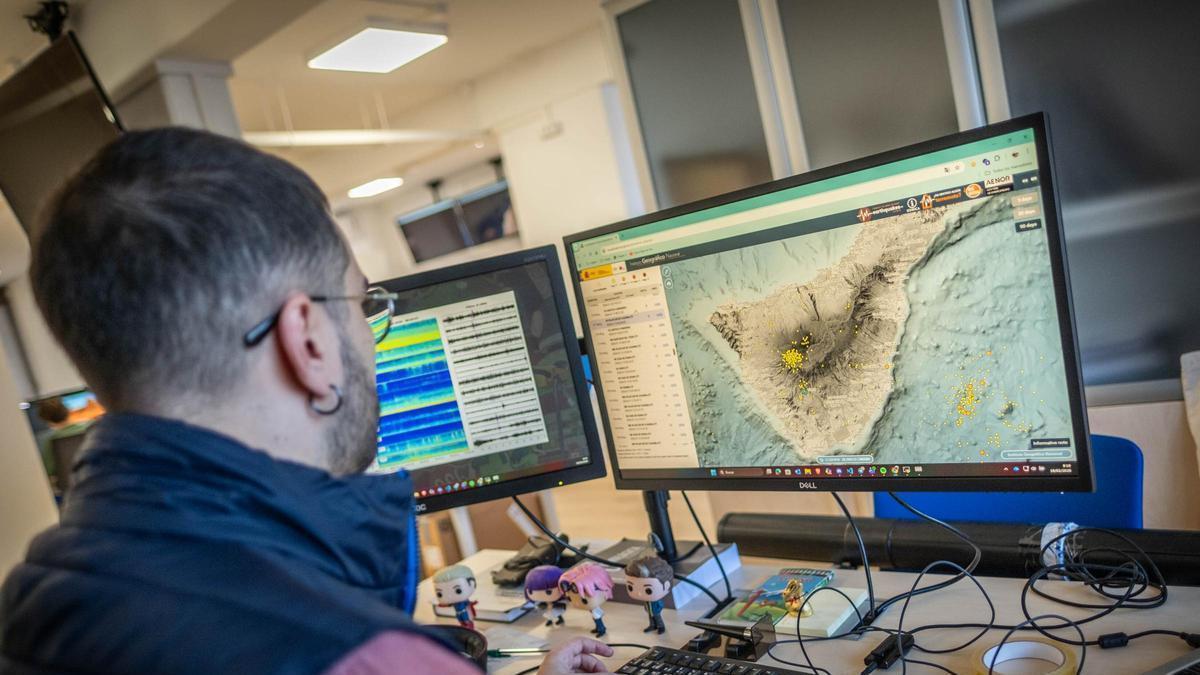
Teide Seismic Swarms: Unraveling Tenerife's Volcanic Pulse
Tenerife, the largest and most populated of Spain’s Canary Islands, is a land shaped by fire and time. At its heart lies the majestic Teide, Spain's highest peak and an active stratovolcano that stands as a constant reminder of the island’s dynamic geological nature. While its breathtaking landscapes draw millions of tourists each year, its underlying seismic activity often sparks interest and concern among residents and scientists alike. Recent occurrences of what experts call an
enjambre sísmico Tenerife – or seismic swarm – have once again brought the volcano's pulse into sharp focus, prompting a closer look at what these tremors signify for the island's future.
Decoding Teide's Recent Seismic Swarms
Seismic swarms are not uncommon in volcanically active regions. Unlike typical earthquake sequences that feature a mainshock followed by aftershocks, swarms are characterized by numerous earthquakes of similar magnitudes, without a clear principal event. They often reflect fluid movement beneath the surface – typically water, gas, or magma.
One notable instance occurred on
November 14, 2024. Between 04:00 and 07:20 UTC, the Teide volcano registered a significant earthquake swarm. Over 500 microearthquakes, each with magnitudes below 1.1, were detected in the Las Cañadas del Teide area, southwest of Pico Viejo. These tremors originated at depths ranging from 8 to 12 kilometers. What made this particular
enjambre sísmico Tenerife stand out was its distinct "drumbeat" pattern – a prolonged sequence of hundreds of small, similarly-sized events occurring at nearly regular intervals. This type of seismicity is often associated with the rhythmic fracturing of rock as fluids migrate through the subsurface, indicating dynamic processes at play deep within the volcanic system.
This isn't an isolated event. The reference context indicates that similar activity has been recorded in the same area in recent years, specifically in October 2016, June 2019, and June–July 2022. The 2016 event, for instance, involved over 766 earthquakes over five hours on October 2nd, preceded by increased hydrogen sulfide (H₂S) emissions and followed by a rise in diffuse carbon dioxide (CO₂) emissions and volcano-tectonic seismicity. These gas and seismic changes strongly suggested magma was rising deep below and releasing fluids into the shallow hydrothermal system.
More recently, reports have highlighted an even larger swarm. One source indicated that more than 2,500 small hybrid earthquakes were recorded "this week" beneath the island’s center and the volcanic system linked to Teide. While most of these events were too weak to be felt by humans, their sheer number and clustering drew significant attention from both the scientific community and the local population, underscoring that the island’s geology remains profoundly active.
A Glimpse into Tenerife's Dynamic Volcanic Past
To truly understand the significance of Teide's seismic activity, it's essential to appreciate Tenerife's rich and complex volcanic history. As the largest island in the Canary archipelago, Tenerife is a mosaic of overlapping stratovolcanoes, some dating back millions of years.
The island’s structure is dominated by its northeast-trending Cordillera Dorsal massif, a geological backbone that connects older volcanic regions with the colossal Las Cañadas volcano. This forms the largest volcanic complex in the entire Canary Islands. A prominent feature of this complex is the Las Cañadas caldera, an impressive depression measuring 10 by 17 kilometers. Its origin is a subject of scientific debate, attributed either to a massive collapse following explosive eruptions, an immense landslide similar to those that formed the La Orotava and Güímar valleys, or a combination of these powerful geological processes.
The caldera is partially filled by the majestic Teide stratovolcano itself. The most recent significant volcanic activity on the island began in the late Pleistocene epoch, leading to the formation of the iconic Pico Viejo and Teide volcanic edifices we see today. Historically, Tenerife has been an active stage for eruptions. It is even believed that Christopher Columbus may have observed a volcanic eruption on the island in 1492 during his first voyage to the Americas. Since then, several flank vents of the Teide volcano have erupted, cementing its status as the most active volcano in the Canary Islands. This long history of intermittent activity underscores why continuous monitoring of phenomena like an
enjambre sísmico Tenerife is so crucial.
What Do These Swarms Tell Us? Understanding Volcanic Monitoring
While seismic swarms can be unsettling, experts emphasize that there is currently no indication of an imminent eruption. The current alerts for Teide remain at normal, or "green," levels. However, the consistent pattern of these swarms, especially those exhibiting drumbeat seismicity and hybrid earthquakes, strongly suggests ongoing magma-related activity deeper underground. This is precisely the kind of movement that dedicated monitoring teams track closely.
Volcanic monitoring is a multi-faceted science. In Tenerife, institutions like the Instituto Geográfico Nacional (IGN) and INVOLCAN (Canary Islands Volcanological Institute) employ a sophisticated network of sensors to keep a watchful eye on Teide.
Key monitoring techniques include:
*
Seismicity: Continuous recording of ground tremors helps scientists pinpoint earthquake locations, depths, and magnitudes. Changes in these parameters, like the depth of earthquakes migrating shallower or specific patterns like swarms, can indicate magma movement or changes in the hydrothermal system.
*
Gas Emissions: Monitoring the composition and volume of volcanic gases (like H₂S and CO₂) emitted from fumaroles or diffusely through the soil provides clues about the type and ascent of magma at depth. Increased emissions can signal magma degassing.
*
Ground Deformation: GPS stations and satellite radar (InSAR) measure subtle changes in the ground's elevation or shape. Inflation could indicate magma accumulation, while deflation might suggest magma withdrawal.
*
Thermal Monitoring: Changes in ground temperature can sometimes precede eruptions, though this is less common for deep-seated magma movements.
When a seismic swarm occurs, scientists analyze the data meticulously. The location (e.g., Las Cañadas del Teide, southwest of Pico Viejo), depth (8-12 km), and characteristics (drumbeat, hybrid earthquakes) all contribute to understanding the underlying processes. For example, hybrid earthquakes often involve both brittle fracturing of rock and the movement of fluids, suggesting interaction between magma/gases and the surrounding rock. While the recent swarms confirm that Teide's plumbing system is active and dynamic, the fact that most events are microearthquakes and deeper indicates a deeper-seated process rather than an immediate threat to the surface. For a deeper dive into these complex seismic events, you might find
Understanding Tenerife's Seismic Swarms: Is Teide Waking Up? insightful.
Living with a Live Volcano: Tips for Residents and Visitors
For residents and visitors to Tenerife, living near an active volcano like Teide is a unique experience. While the island's volcanic origins bless it with incredible beauty and fertile soils, it also necessitates a proactive approach to understanding and respecting its geological realities.
Here are some practical tips and facts:
*
Stay Informed Through Official Channels: Always rely on information from official sources such as the Instituto Geográfico Nacional (IGN) and the Canary Islands government. Avoid rumors and sensationalized reports from unofficial sources. Official alerts are public and clear.
*
Understand Alert Levels: Volcanic alert levels range from Green (normal) to Red (eruption in progress). Tenerife is currently at a Green alert level, meaning no immediate danger.
*
Emergency Preparedness: While no eruption is imminent, it’s always wise for residents in any volcanically active region to be familiar with local emergency plans and routes, just as one would for any natural disaster.
*
Respect the Environment: When hiking or exploring the Teide National Park, always stick to marked trails and follow park regulations. This is for both your safety and the preservation of this unique ecosystem.
*
Geotourism: Embrace the geological wonders of Tenerife. The science behind these seismic swarms and the island's formation is fascinating. Learning about it enhances the experience of living on or visiting this remarkable island. If you're curious about the ongoing monitoring efforts and the latest data,
Tenerife's Teide: Over 2,500 Quakes and Deep Magma Activity offers additional context.
The regular occurrence of an
enjambre sísmico Tenerife serves as a powerful reminder that our planet is a living, breathing entity. Teide, though often tranquil in appearance, is continuously evolving beneath the surface.
Conclusion
The recent seismic swarms around Teide are a testament to Tenerife's ongoing geological vitality. While the increased microseismicity and gas emissions indicate active processes involving magma and hydrothermal fluids deep underground, scientific monitoring shows no signs of an imminent eruption. Instead, these events provide invaluable data, allowing volcanologists to refine their understanding of Teide's complex plumbing system. For residents and visitors, the message is one of informed awareness: enjoy the island's spectacular volcanic landscapes, trust official scientific assessments, and appreciate the powerful forces that continue to shape this extraordinary corner of the world. Teide is very much alive, and through diligent monitoring, we continue to learn more about its fascinating, fiery heart.